
 United States (English)




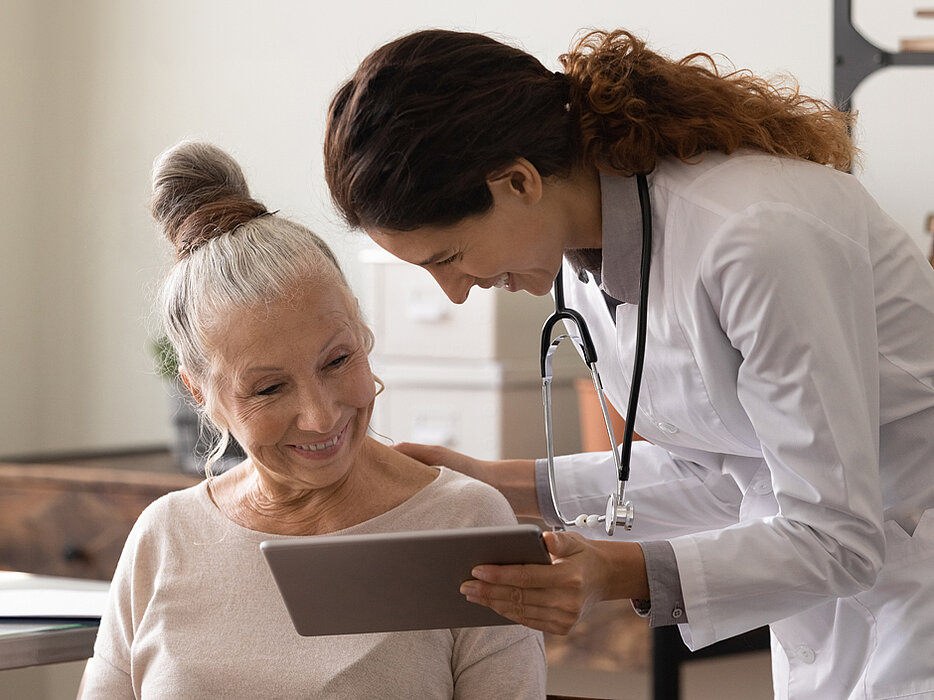
Telemedicine for remote communities: the healthcare model of Elba Island


Telemedicine: from emergency response to integrated healthcare service
Thanks to the National Recovery and Resilience Plan (PNRR), telemedicine has moved beyond the fragmented initiatives that followed the COVID-19 pandemic and has become a long-term strategic investment in healthcare. The decree approved by the State-Regions Conference at the end of 2025 established the National Telemedicine Platform as a permanent service, fully interoperable with the Electronic Health Record (EHR). The regulatory framework is Ministerial Decree 77/2022, the reform of local healthcare services which redesigned community-based healthcare services and made equitable access to care a key objective. The impact of this approach is particularly evident in geographically isolated and underserved areas. Italy’s inland and remote areas are home to approximately 13.5 million people, 23% of the population, and in several regions, up to 20% of residents need more than 30 minutes to reach the nearest hospital. For older adults and people living with chronic conditions, accessing healthcare can become a significant burden, resulting in time away from daily activities, additional travel costs, greater reliance on caregivers, and, in many cases, delayed medical appointments.
Benefits and clinical outcomes of telemedicine
At the heart of the model are patient-centred care and continuity across the pathway. Community Houses – and, increasingly, patients' homes – become an integral part of the care pathway, extending healthcare delivery beyond the hospital setting. The benefits are well documented: reduced travel requirements, shorter waiting times for specialist assessments and clinical reports, improved treatment adherence, continuous monitoring of chronic conditions, and stronger collaboration among specialists, family doctors and nurses. Evidence of effectiveness is particularly strong in the management of chronic diseases. In patients with heart failure, recent systematic reviews suggest that structured telemonitoring of key clinical parameters (weight, heart rate and oxygen saturation) can help reduce rehospitalizations. In chronic obstructive pulmonary disease (COPD), an umbrella review published in the Journal of Medical Internet Research found that telemonitoring was associated with reductions in disease exacerbations and hospital admissions, although other meta-analyses have reported more consistent benefits in reducing emergency department visits than hospitalizations. The message from the literature, however, is clear: telemedicine delivers the greatest value when it is integrated into well-defined clinical pathways and targeted to patients most likely to benefit. Challenges remain, particularly in relation to the digital divide. In Italy, only 19.3% of people aged 65 and 74 have at least basic digital skills, highlighting the need to ensure that digital health solutions remain accessible and user-friendly for older adults. The Elba Island model addresses this challenge through a clear principle: patients are never left to navigate the system on their own.
How televisits and telemonitoring work
During a televisit, the patient attends a local healthcare facility, typically a Community House, where they are assisted by a family and community nurse (IFeC), while the specialist joins remotely. The nurse performs the examinations in real time – an electrocardiogram, respiratory function evaluations, and digital auscultation of heart and lung sounds. Diagnostic data and test results are uploaded to an integrated clinical platform, allowing the specialist to review the information during the consultation and immediately produce the digitally signed report that is automatically linked to the patient’s Electronic Health Record (EHR).
Telemonitoring follows a complementary approach. Although it is not yet fully operational as a standard service within the regional telemedicine platforms supported by the PNRR, implementation is underway and the nationwide deployment of monitoring devices is progressing.
Under this model, patients with chronic conditions are provided with a home monitoring kit containing certified medical devices that measure key vital parameters such as body weight, heart rate and oxygen saturation. Data are automatically transmitted to a central platform, enabling healthcare professionals to identify early signs of clinical deterioration and intervene promptly before the condition progresses to an acute episode requiring emergency care or hospitalization.
As a result, follow-up will no longer rely on isolated snapshots of a patient's condition but will provide a continuous view of their health status over time.
The case of Elba Island: a laboratory for proximity care
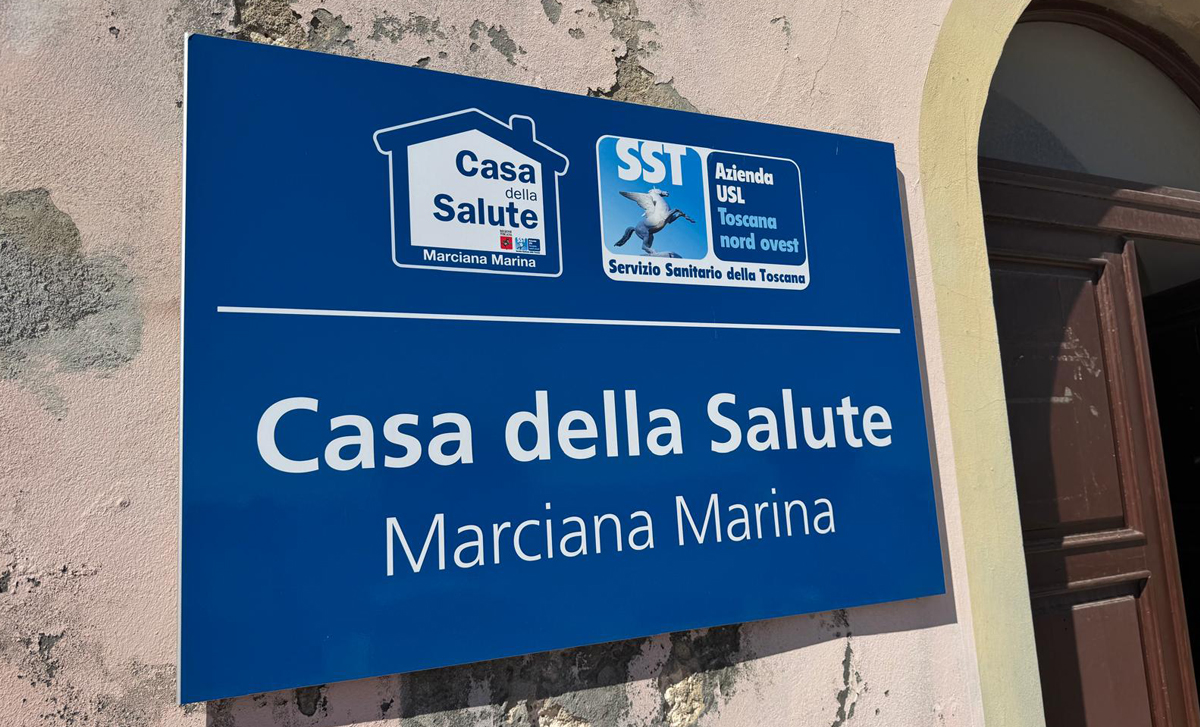
On Elba Island, this model has already become part of routine clinical practice. A network of outpatient clinics in the Community Houses of Marciana Marina, Rio Marina and Capoliveri is connected to Portoferraio Hospital, involving 3 internists, 17 general practitioners and 13 family and community nurses.
The model was developed and tested from 2024 through an experimental phase[1] funded under the PNRR Tuscany Health Ecosystem programme (Spoke 10 – Population Health, line P5 "Chronic Care Telemedicine": supporting telemedicine for improving chronic care patients, in collaboration with the Scuola Superiore Sant'Anna and Fondazione Toscana Gabriele Monasterio. The project concluded at the end of 2025, and since May 2026 the service has been fully operational within Azienda USL Toscana nord ovest. At present, the programme focuses on televisits and teleconsultations, while telemonitoring and remote patient management are expected to be introduced soon.
"Elba Island provides an ideal setting for demonstrating the value of telemedicine: not simply as a testing ground for innovation, but as a place where practical solutions can deliver measurable benefits to patients," explains Alessandro Iala, Head of Digital Transition for the USL Toscana nord ovest. "The challenge is not only healthcare-related, it is also geographical and organizational. Many citizens are older adults living with chronic conditions, and accessing specialist care often requires travel, sometimes to the mainland, resulting in significant costs and delays, particularly when air ambulance transport is required. We viewed telemedicine not merely as a technology, but as an opportunity to redesign care delivery."
According to Iala, the greatest challenge was not the technology itself, but securing the engagement of healthcare professionals. "One of the elements on which we knew we had to invest time, resources and patience was the involvement of doctors, nurses and specialists." The collaboration between ASL and professionals was the key to the success of the initiative. General practitioners identified patients most likely to benefit from the service and became active partners in patient management. Family and community nurses acted as local care facilitators, while specialists conducted consultations remotely and issued digitally signed reports immediately after each visit. These reports are automatically stored within regional health information systems and linked to patients’ Electronic Health Records, ensuring that clinical information can be shared seamlessly across the healthcare network.
Guido Vagheggini, Director of Internal Medicine at Portoferraio Hospital and clinical lead for respiratory care, describes how patients are selected for the programme: “We analysed ISTAT demographic data, hospital discharge diagnoses from 2022 to 2024, hospital pharmacy prescription records and general practice databases.”
The result is a patient registry for each family doctor, identifying individuals with heart failure or chronic obstructive pulmonary disease (COPD), the two chronic conditions selected because of their prevalence on the island and their need for ongoing monitoring.
Care is delivered through a coordinated schedule. Patients first undergo diagnostic assessments with a nurse at a Community House and are then seen immediately afterward by a remote specialist, who may be based either in Portoferraio or at a tertiary referral centre on the mainland.
During the visit, nurses also administer questionnaires assessing quality of life, symptom burden, disease impact and treatment adherence, all of which contribute to the overall clinical assessment and care plan.
Follow-up schedules are tailored to individual needs, ranging from appointments every two to three months for less stable patients to less frequent reviews for those with well-controlled conditions. Priority is given to higher-risk patients, including those recently discharged following hospitalization for heart failure decompensation or COPD exacerbation, who are reassessed within one to two months.
During the pilot phase, some patients were enrolled in self-monitoring programmes tracking heart rate, oxygen saturation and body weight, an early example of the telemonitoring services that will soon be implemented on a larger scale.
How have patients responded? "Patients have responded very positively to this model of care," says Vagheggini. “They do not have to travel, and they are supported by the same nurse they already know and trust. They experience continuity of care and feel connected to a healthcare team that remains actively involved in their treatment journey.” This level of support would be difficult to achieve through a fully self-managed virtual consultation conducted at home and represents a practical response to the digital divide affecting many older adults.
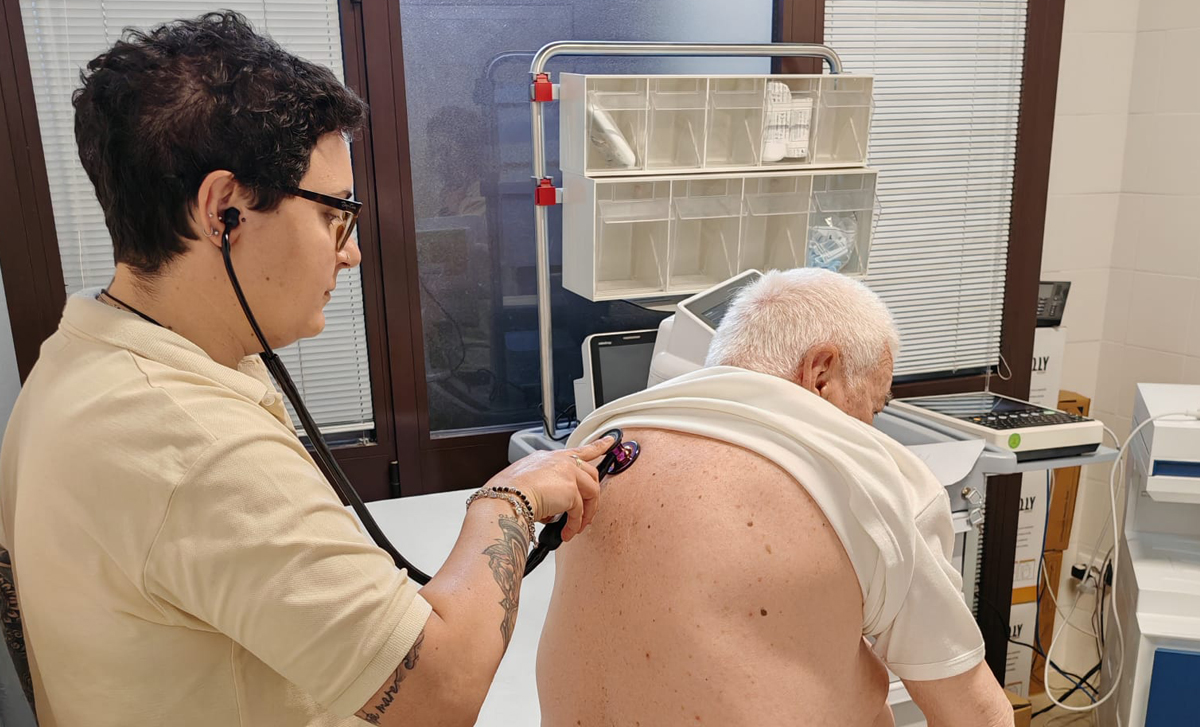
The main operational challenge remains staff availability. Nurses must balance telemedicine activities with wound care, blood sample collection and home visits, a reminder that technology can expand access to care only when sufficient healthcare professionals are available to support it.
According to Iala, the model can be replicated in other settings and has already been adopted, in part, in Capraia, Gorgona and the Garfagnana area. "What can be replicated is not simply the technology, but the care model itself: a network that integrates healthcare professionals, facilities and digital platforms within clearly defined care pathways."
These pathways have been formalised through integrated care plans (PDTAs) that also address social determinants of health, including geographical isolation and psychological vulnerability. In these cases, telemedicine serves not only to expand access to services but also to increase meaningful contact between patients and healthcare professionals.
The next phase is already planned. Once authorised by the Tuscany Region, telemonitoring and remote patient management services will be activated through the regional telemedicine platform (IRT), which is integrated with the national platform developed under the PNRR. Monitoring devices have already been procured and clinical protocols defined, positioning Tuscany among the first Italian regions—alongside Lombardy and Puglia—to implement these services.
The Elba Island experience was also presented at the recent Respiratory Impact Conference of the European Respiratory Society in Rotterdam, highlighting its growing relevance as a model for telemedicine-enabled care in geographically isolated communities.
What tools make remote diagnosis possible
A remote consultation can be as effective as an in-person visit only when specialists have access to the same objective clinical information.
Equally important is the ability to manage and share data securely and in real time. This is where the Esaote Group's technology plays a key role. On Elba Island, every examination performed by a nurse is uploaded in real time to SUITESTENSA, the Enterprise Imaging platform developed by Ebit, the Esaote Group company dedicated to Healthcare IT. Examination results and clinical reports are immediately available to the specialist conducting the consultation, regardless of location, while remaining securely stored and fully integrated with the regional Electronic Health Record (EHR) and local clinical information systems. Originally designed to integrate radiology and cardiology workflows across hospitals and community healthcare settings, SUITESTENSA includes dedicated telemedicine and remote monitoring capabilities. Through SUITESTENSA RemoteCare, the platform extends care beyond traditional healthcare facilities and into patients' homes, integrating telemonitoring, telemedicine and teleassistance services for people living with cardiovascular conditions, including through the use of wearable medical devices.
SUITESTENSA provides clinicians with real-time access to clinical information and diagnostic examinations, regardless of where they are located. This ensures the seamless flow of information between specialists, general practitioners, nurses and the territory, as well as the continuity of the care pathway. The platform also allows professionals from Fondazione Toscana Gabriele Monasterio, a recognized centre of excellence in cardiovascular medicine, and professionals from Azienda USL Toscana nord ovest to review and validate examinations remotely with the same level of clinical oversight available on site. As a result, patients on Elba Island can benefit from specialist expertise without the need to travel.
More than a data repository, SUITESTENSA supports an integrated organisational model that can be replicated in other geographically complex and underserved areas, while maintaining high standards of quality, security and information traceability.
No longer an experiment
"I would not describe the Elba Island project as an experiment," says Iala. "Experimenting means not having stable technology, defined protocols, a clear project. In our case, we are implementing proven technologies within clearly defined clinical pathways and established care protocols, while maintaining the willingness to learn and continuously improve." Over the coming years, measurable outcomes will help assess the impact of the Elba Island model on hospital admissions, emergency department visits and patients' quality of life.
Yet the project has already demonstrated an important principle: when technology supports a well-designed model of care – rather than driving it – distance ceases to be a barrier to healthcare access. And islands, mountains, inland areas can transform from fragile margins of the system to laboratories of its future.
This article is part of the editorial project 'Technology and empathy: the new story of care with Esaote and PEOPLE', which is a collaboration between Esaote and PEOPLE Magazine.
[1] "Sustainable implementation of telemedicine in internal areas" - Prot. Proximity Care-TM, approved on 29/02/2024 by the Vasta Nord Ovest Area Regional Ethics Committee, authorized by Decree No. 921 of 11/03/2024 of the USL Toscana Nord Ovest Company (Sponsor: Fondazione Toscana Gabriele Monasterio; Participating business centre ASLTNO: O.U. Early Takeover and Insufficiency Management Section Respiratory – Elba; Principal Investigator: Dr. Guido Vagheggini
Read other articles

TECHVISION
Artificial intelligence in healthcare: how diagnosis, imaging and clinical practice are changing
Artificial intelligence (AI) has become an integral part of many…
TECHVISION
From brain shift to precision: the role of intraoperative MRI in glioma surgery
For decades, neurosurgeons operating on gliomas have long lacked MR…

CARE
Behind the scenes of the medical infrastructure supporting a major sporting event: what it takes to ensure care at the Winter Olympics
The organisation of imaging and healthcare in a multi-venue event such…
CARE
How to design technology that saves lives: from the evolution of imaging to the I‑Genius case
In the 1990s, designing an imaging system mainly meant meeting a…
CARE
Caring for the carer: a still underestimated medical responsibility
Behind every person facing a serious illness, there are others who…

