
 UK & Ireland (English)




Behind the scenes of the medical infrastructure supporting a major sporting event: what it takes to ensure care at the Winter Olympics


Three regions, six Olympic villages and thirteen competitive sites spanning more than 22,000 square kilometres: from the arenas of Milan to the alpine slopes of Bormio and Livigno, from the peaks of Cortina d'Ampezzo to the ski jumps of Val di Fiemme. The Milan Cortina 2026 Olympic and Paralympic Winter Games are the most spread-out edition in the history of the Winter Olympics. Over 3,500 athletes from 93 countries will compete for 195 medals in 16 Olympic sports and 6 Paralympic sports between February and March 2026.
Behind the spectacular competitions, however, operates a vast medical infrastructure, designed to guarantee each athlete - and the entire Olympic family - medical care, meeting the highest international standards, across all venues and at a moment’s notice. Organising medical and diagnostic imaging services over such a vast territory presents an unprecedented challenge.
An integrated and unprecedented model
The distinguishing feature of this edition is a fully integrated model developed in partnership with the public healthcare system, a first in Olympic history. As explained by Giuseppe Massazza, Chief Medical Officer of Milano Cortina 2026 and Professor of Physical and Rehabilitation Medicine at the University of Turin, whose Olympic experience dates back to Turin 2006: “The Milan Cortina 2026 Olympic Games are totally new. 'There are three regions involved - Lombardy, Veneto, Trentino-Alto Adige - a vast territory. Information must flow seamlessly through a network connecting competition venues and designated Olympic hospitals.
Unlike previous editions, where medical services were organised by the Olympic Committee and later coordinated with public facilities, this model was jointly developed from the outset. “In Turin 2006, the legacy (meaning the facilities and equipment that remained after the Games) was measured afterwards”, Massazza recalls. "This time, however, legacy planning came first. The councillors, the regional presidents have joined an Olympic programme in the health sector with a precise idea of leaving a tangible post-Olympic Games legacy”. As a result, all infrastructure upgraded for the Olympics - from emergency rooms to MRIs - will remain operational after the Winter Games, benefiting both residents and tourism. Esaote, Official Sponsor of the Milan Cortina 2026 Olympic and Paralympic Winter Games, will also leave in place the medical imaging equipment provided for the athletes in the area.
The architecture of the system: from competition fields to Olympic hospitals
Massazza describes this approach as “entirely innovative” and difficult to replicate elsewhere. When Italy decided during the bid phase that the public healthcare system would form the backbone of the Olympic medical structure, it set a new precedent. "The Milan Cortina 2026 model is completely different from that of Turin, because it is fully integrated with the public system, thanks to formal commitments signed during the candidature process by both the national government and the regional authorities" he explains. At the Paris 2024 Olympic Games, for example, the internal health system of the Games operated autonomously: to access information from the external system one had to 'knock', and information did not flow automatically. In contrast, the Milano Cortina 2026 Olympic medical centres will have real-time access to both internal Games data and regional healthcare networks. This integration was possible because Italy's national health service, with its regional articulation, offered a solid base on which to build. The four regional systems involved are among the most advanced in the country, with well-established operations centres, capillary emergency networks and a consolidated tradition of volunteer healthcare support - from ANPAS (Associazione Nazionale Pubbliche Assistenze) to the Italian Red Cross and the Green Cross. 'The public system is an integral part of the Milan Cortina 2026 healthcare model” Massazza summarises. "This represents a major opportunity, because everything implemented for the Games will generate long-term benefits for residents and for tourism well beyond the Winter Olympics”.
The athlete pathway: what happens in case of injury
The management of an injured athlete follows a clearly defined pathway, structured around progressively higher levels of diagnostic and therapeutic complexity. As Massazza explains: "If the injury is minor, the athlete is transported to the Medical Station at the site. Here, an initial assessment is carried out. If further evaluation is required, the athlete is transferred by ambulance or helicopter to an Olympic Polyclinic”.
The Olympic Polyclinics were established in the Olympic villages of Milan, Bormio and Livigno. These multidisciplinary facilities are equipped with advanced diagnostic imaging – including ultrasound, MRI and CT scan – as well as telemedicine systems and specialised medical staff. In Bormio, for example, a modular polyclinic covering approximately 550 square metres was constructed in compliance with International Olympic Committee specifications and includes an inpatient area. In Livigno, the local Casa della Salute (Community Health Centre) was fully renovated and upgraded with MRI and CT scanners, an X-ray table, new hospital beds and a dedicated connecting tunnel to the helipad.
If the case is resolved at that level, the athlete returns to the Olympic Village. Otherwise, transfer is arranged to one of the designated Olympic Hospitals: the ASST Grande Ospedale Metropolitano Niguarda in Milan - the main referral centre - and the Eugenio Morelli Hospital in Sondalo, strategically located in the Valtellina area. Both facilities provide dedicated pathways for athletes and the Olympic family, separate from those serving the general public.
At Niguarda, the Olympic Emergency Department, inaugurated in January 2026, features direct and separate access, ten open-plan stations and four inpatient rooms. The Olympic Ward on the third floor offers eleven rooms equipped for semi-intensive care. In Sondalo, the intervention resulted in a renovated Emergency Department with a Short-Stay Observation Unit (OBI), separate clinical pathways and the installation of a new state-of-the-art MRI.
The Veneto cluster: Cortina, Belluno and Verona
In the Veneto Region, healthcare has likewise been organised according to a dual-track model: one pathway dedicated to the Olympic event and a parallel system ensuring full continuity of services for the resident population. The Veneto cluster includes the competition venues in Cortina d'Ampezzo - women's alpine skiing on the Tofane slope, bobsleigh, luge and skeleton at the Cortina Sliding Centre, and curling at the Olympic Stadium - with an expected daily presence of approximately 600 athletes, 2,000 workforce members and up to 10,000 spectators. Added to this is the Arena di Verona, which will host the Closing Ceremony of the Olympic Winter Games and the Opening Ceremony of the Paralympic Winter Games.
The core of the Veneto healthcare system is the Policlinico Olimpico Codivilla in Cortina, managed by ULSS 1 Dolomiti, which has been fully renovated and equipped with state-of-the-art technology. The Olympic emergency room, directed by Professor Vito Cianci, provides stabilisation, diagnostic and therapeutic services, supported by a wide range of specialist consultants — including orthopaedists, physiatrists, ophthalmologists, gynaecologists and psychologists — and rapidly determines whether the patient can be discharged or requires transfer to a designated Olympic hospital. At the Olympic Village in Fiames, which hosts around 1,400 athletes in mobile homes, 24-hour medical care, a pharmacy and dental surgery are guaranteed.
Codivilla faced its first real stress test during the accident involving US skier Lindsey Vonn, who was rescued by the Falco helicopter after a serious downhill crash on the Tofana slope and taken within minutes to the polyclinic, demonstrating the full operability of the emergency and diagnostic chain. In cases requiring more complex care, the two Olympic Hospitals designated for the Veneto region by the Milan Cortina Foundation are the Borgo Trento Hospital in Verona and the San Martino Hospital in Belluno. Borgo Trento, the main reference hub of the regional healthcare network, meets the IOC requirements offering a Trauma Centre, Neurosurgery, Advanced Radiology (CT, MRI, CTA, MRA), Stroke Unit, Interventional Cardiology, Orthopaedics and Surgery, as well as a helipad and SUEM 118 Centre operating 24 hours a day.
In addition to supporting the ceremonies at the Arena di Verona, it serves as a backup hub for major trauma cases from both the Veneto and neighbouring Trentino competition sites. Belluno Hospital and the Pieve di Cadore facility have also been upgraded as supporting structures within the network.
Approximately 1,000 additional healthcare professionals from across the Veneto region are working in shifts between Cortina and the relevant facilities, supported by volunteers from the Red Cross, SUEM 118 and Soccorso Alpino. ULSS 1 Dolomiti has also activated a special surveillance through the Prevention Department for real-time monitoring of any infectious outbreaks and food safety controls.
Legacy is a declared goal for Veneto as well. As ULSS 1 Dolomiti Commissioner Giuseppe Dal Ben emphasised, the Codivilla will be the most important legacy of the Cortina Olympics. The new emergency vehicles acquired for the competitions - including off-road vehicles designed for extreme conditions, 4x4 ambulances and new medical equipment, will remain at the disposal of local communities, from Belluno to Verona, strengthening emergency response capacity across the region.
The Trentino-South Tyrol cluster: Val di Fiemme, Anterselva, Cavalese and Trento
Trentino-Alto Adige hosts three Olympic competition venues. In Predazzo, in Val di Fiemme, the ski jumping and Nordic combined competitions take place on the historic ski jumps of the Ski Jumping Stadium. In Tesero, the cross-country skiing competitions are held at the Cross-Country Skiing Centre. In the province of Bolzano, in Anterselva, the biathlon competitions are staged at the Südtirol Arena - the venue expected to record the highest spectator attendance of the entire Games. On peak days, Val di Fiemme alone is expected to welcome more than 40,000 people.
The Azienda Sanitaria Universitaria Integrata del Trentino (ASUIT) mobilised a total of more than 1,400 healthcare professionals. The system is organised on a three-level integrated model. The first level is the Olympic Village Hospital in Predazzo, set up inside the Alpine School of the Guardia di Finanza, where some 750 athletes and delegation members are housed. Operating 24 hours a day, it provides general medicine, orthopaedics, physiotherapy, basic diagnostics services and telemedicine support, with dedicated ambulances for emergency management. An outpatient clinic in Predazzo, within walking distance of the village, functions as an integrated extension of this facility and offers additional specialist services, including dentistry and ophthalmology. The two sites in Tesero and Predazzo are staffed with medical specialists in first aid, anaesthetists and nurses, in close coordination with Trentino Emergenza.
The second level is the Cavalese Hospital, the designated Olympic health centre for Val di Fiemme, identified for its strategic position in the heart of the competition venues and for its consolidated experience in managing sports and mountain-related trauma. Its Emergency Department was upgraded, and the radiology, orthopaedics and internal medicine departments were reinforced with additional staff and equipment.
The third level is the Santa Chiara Hospital in Trento, a second-level Olympic hospital and provincial health centre of maximum complexity with 660 beds (of which 36 in intensive care), the seat of the provincial trauma centre and reference point for complex cases with all medical and surgical specialities operating 24 hours a day. During the Winter Games, it was further enhanced with dedicated pathways for the Olympic family, reserved beds and rapid transport links to Cavalese and the competition venues.
In South Tyrol, for the biathlon competitions in Antholz, the Alpine and Speleological Rescue Service ensures a permanent on-site presence with dedicated teams, activated through the 112 Single Emergency Operations Centre in coordination with the emergency system of the Autonomous Province of Bolzano.
Legacy remains a central objective for Trentino as well. The structural and organisational improvements in Cavalese, Trento and Predazzo are set to remain in place, along with new equipment and expanded telemedicine and digital services benefiting more remote mountain communities. The Region is also consolidating the link between sport, health and social inclusion through the development of the Paralympic sports centre at Villa Rosa hospital in Pergine and the “Trentino for all” programme, which ensures accessible facilities and services for people with disabilities.
Operating centres and total visibility
Linking each node of this network is a multi-layered system of operations centres. Each region has a dedicated Olympic centre, which is added to the ordinary 112 and 118 centres without taking resources away from the public service. These regional centres dialogue with the Main Operation Centre (MOC), the control centre of the Milan Cortina 2026 organisation, which monitors not only health, but also transport, logistics, security and catering in real time.
"We actually have visibility of everything that is happening both inside and outside" explains Massazza, highlighting the difference from previous models. "At Paris 2024, accessing external systems required actively requesting information; it wasn’t automatic. Today, the Olympic centres can read both internal and external systems, and the MOC sees everything. The patient-athlete is followed throughout the entire journey, from on-track rescue to discharge, with the International Olympic Committee’s Medical Commission kept constantly informed via the Chief Medical Officer”.
Imaging as critical infrastructure
In a context such as winter sports – considered medium to high risk of injury due to the combination of speed, joint twisting and unpredictable surfaces - imaging is not merely an accessory but a critical safety infrastructure.
Technological advances in recent years have transformed diagnostic capabilities. Low-field MRIs, thanks to their compact size and cost efficiency, can now be installed close to the competition venues. Pietro Simone Randelli, professor of Orthopaedics and Traumatology at the University of Milan and president of SIOT, explains that these solutions are “perfectly sustainable, of an acceptable size if not small, and thanks to artificial intelligence, they allow very high-quality images”. And it adds a decisive advantage: "These MRIs today make it possible to do a very good quality examination in about ten minutes compared to thirty to forty minutes with a conventional high-field machine”.
Usability has also improved: open MRI machines reduce the claustrophobic effect to almost zero, making the examination more tolerable for athletes who are often under stress. Andrea Panzeri, head of the Sport Trauma Center at the Istituto Clinico Galeazzi and president of the Medical Commission of the Italian Winter Sports Federation, confirms: “After an injury, half an hour later I am already undergoing an MRI. It completely changes the approach to the patient-athlete”.
From emergency to prevention: imaging throughout the sports cycle
Imaging is no longer only used to diagnose injuries. It has become a tool that accompanies the athlete's entire sporting cycle: from prevention to rehabilitation, up to the evaluation of the return to competition. “Even without a confirmed clinical finding, all it takes is a concern from the athlete, and we go straight to imaging, because we don’t want to underestimate a minor issue that could worsen”, Panzeri explains. Imaging thus becomes a secondary prevention tool, capable of detecting early signs of overload before a subclinical lesion develops into a full injury.
The new dynamic MRIs allow analysis of the joint’s entire range of motion, revealing micro-instabilities that a clinical exam or static MRI might miss. Some machines even enable evaluations in orthostasis, which is crucial in sports that stress the kinetic chain vertically, such as downhill skiing. And the absence of radiation in MRI allows frequent follow-ups without cumulative risk, an important advantage for athletes who need close follow-ups. “Early diagnosis enables earlier treatment and can prevent a minor injury from compromising a season or, in worst cases, a career”, Randelli notes.
An army of specialists
Behind the technology is an impressive human organisation. Every day, at each of the thirteen Milan Cortina 2026 competition sites, around 150 people are dedicated to healthcare. Staff are selected according to strict criteria and recruited through agreements with ASST, Niguarda, rescue associations, the Red Cross, and public and private facilities. Shifts are organised in five to seven day periods, with medical services operating 24/7 for the duration of the Winter Olympics.
Massazza emphasizes one fundamental point: super-specialisation. "The high degree of specialisation across disciplines - from physiatrics to physiotherapists to orthopaedists - makes the difference. We teach young professionals that if you want to work in sports medicine, you first need to understand that specific sport, because each sport has its own pathologies”. In winter sports, this includes knowledge of knee ligament and capsular injuries, shoulder instabilities, and impact or overload injuries specific to each discipline.
For diagnostics, the collaboration with SIRM - the Italian Society of Medical and Interventional Radiology - made it possible to involve top-class sonographers and radiologists specialising in sports medicine. The process is circular: the athlete presents a problem, sport-specific knowledge guides the clinician in formulating the correct question for the radiologist, who interprets the data using advanced technology.
The legacy that remains
There is one aspect of this organisation that goes beyond the two weeks of competitions. The real bet of Milan Cortina 2026, the one Massazza insists on most, is the health legacy, the legacy. The polyclinics in Bormio and Livigno will remain operational, ensuring that facilities, technologies, and expertise continue to serve local communities and tourism. The new emergency department at Niguarda will benefit Lombardy’s population, and MRIs installed in Alpine areas will remain accessible.
"Everything done by the medical service leaves a legacy for the population," says Massazza. "We work for the future, for the next generations. This is the deeper meaning of the Olympics: to act not only for the Winter Games, but above all for the nation”.
The integrated model of portable ultrasound, proximity MRI, dedicated radiology, artificial intelligence and interdisciplinary collaboration is the new frontier of sports health protection.
As Massazza said a few days before the opening of the Games: "We are ready and confident to support the Winter Games. But also cautious, because otherwise we would be naïve. A balance that smacks of clinical wisdom and organisational awareness: the same combination needed to keep the largest medical machine ever built for a Winter Olympics on its feet.
This article is part of the editorial project 'Technology and empathy: the new story of care with Esaote and PEOPLE', which is a collaboration between Esaote and PEOPLE Magazine.
Read other articles
CARE
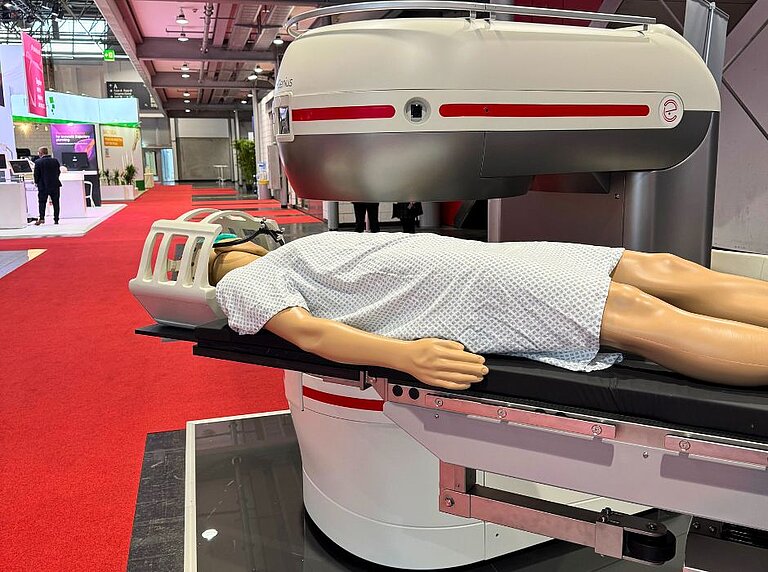
How to design technology that saves lives: from the evolution of imaging to the I‑Genius case
In the 1990s, designing an imaging system mainly meant meeting a…
CARE
Caring for the carer: a still underestimated medical responsibility
Behind every person facing a serious illness, there are others who…
CARE
Prevention begins within the company: breast cancer screening in the workplace
October marks Breast Cancer Prevention Month - a time to spotlight a…

CARE
Technology and empathy: the new narrative of care with Esaote and PERSONE
We are living in an extraordinary age for medicine: we’ve never had…
CARE
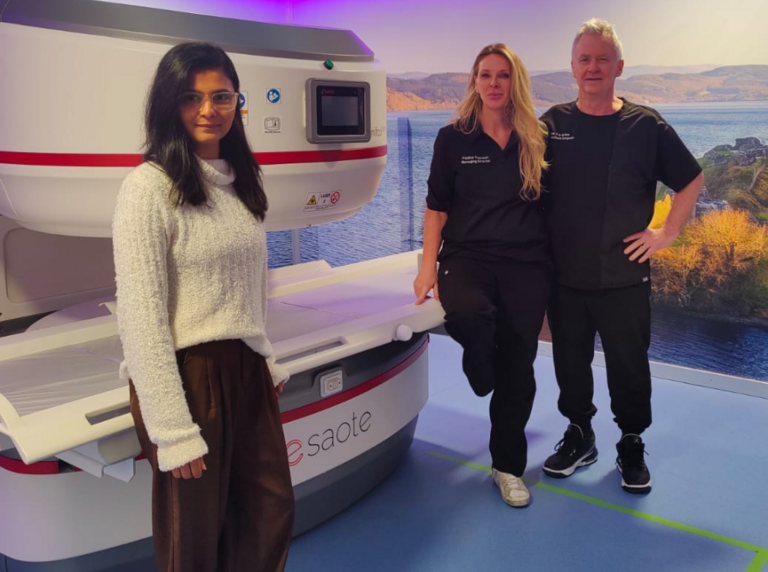
How MRI technology enables democratising access to diagnostics in remote areas
A new open MRI scanner brings advanced diagnostics directly to people.…

